 Digital patterns
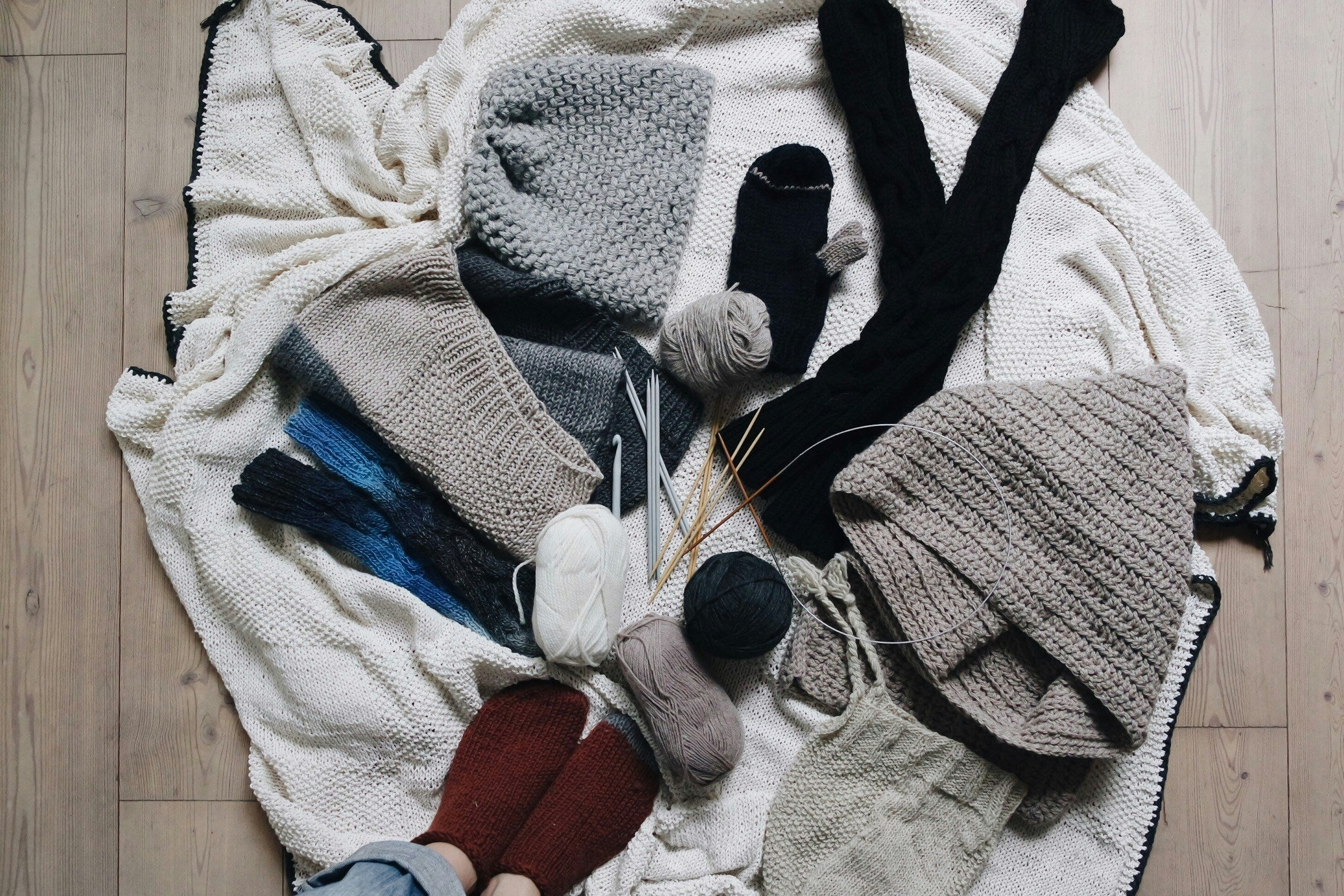
Every knitted piece begins with a material choice. The fibre, the way it is processed into yarn, and the stitches you use all help determine how the finished fabric feels and behaves.
This guide explores different animal fibres, the journey from fleece to yarn, and practical questions to ask when choosing materials for your next knitting or crochet project.
Understanding Wool: Types and Characteristics
Merino and Shetland wool come from sheep. Alpaca fibre comes from alpacas, so it should be considered separately rather than described as another sheep breed. Each can be useful for different projects, but the name of the fibre does not tell you everything about the finished yarn.
Merino wool
Merino wool is often chosen for its soft feel and natural elasticity. It can work well for sweaters, scarves, and other pieces worn close to the skin.
Softness still varies between yarns. Fibre fineness, spinning, blends, and finishing treatments all influence the result. If comfort is especially important, feel the yarn or try a washed sample against your skin before committing to a large project.
Shetland wool
Shetland wool has a strong connection with traditional knitting, including Fair Isle colourwork. Many Shetland yarns have a more textured feel than very fine Merino yarns and are available in natural shades as well as dyed colours.
It can be a useful option for colourwork and warm layers. However, durability and comfort depend on the particular yarn and fabric, so check the manufacturer's description rather than assuming every Shetland yarn behaves identically.
Alpaca fibre
Alpaca fibre is used in yarns for garments, accessories, and home décor. Some alpaca yarns produce a soft fabric with a flowing drape, while blends can change the way the fabric stretches and holds its shape.
Do not assume that an alpaca yarn will feel comfortable for everyone. Skin sensitivity varies, and the fibre blend, yarn texture, and finished fabric all matter. A small sample is more useful than a general promise of softness or suitability for sensitive skin.
Read the full yarn label
Before choosing a yarn, check its fibre percentages, yarn weight, length per ball, recommended tools, and care instructions. Two yarns labelled with the same fibre or weight can still produce noticeably different fabrics.
The Production Process: From Sheep to Yarn
Wool passes through several stages before it becomes yarn. The exact route depends on the intended product.
- Shearing and sorting: Fleece is collected and sorted according to characteristics such as fibre length, fineness, and condition.
- Scouring: Washing removes grease, dirt, and other contaminants. The clean fibre is then dried.
- Carding: Fibres are separated and untangled, preparing them for further processing.
- Combing where required: Worsted processing includes additional alignment and removal of shorter fibres. Woollen and worsted describe processing methods; they should not be confused with the yarn-weight label “worsted weight”.
- Spinning: Prepared fibres are drawn out and twisted into yarn. Yarn construction influences its texture and performance.
- Dyeing and finishing: Colour can be added at the fibre, yarn, fabric, or garment stage, so dyeing does not always happen before spinning.
For a closer look at these stages, explore Woolmark's guide to wool processing.
Sustainable Practices and Responsible Wool Sourcing
Understanding where a yarn comes from can help you make a more informed purchase. A useful description explains the material and its production rather than relying only on words such as “natural”, “green”, or “eco-friendly”.
Animal welfare and land management
Look for information about animal care, shearing practices, and how grazing land is managed. These are relevant questions throughout wool production, but broad promises should be supported by details about the actual supplier or material.
Processing and traceability
Ask where the fibre was sourced and where the yarn was spun and dyed. Clear information helps you understand the supply chain and compare products. If environmental claims are made, look for an explanation of what was measured or verified.
Understand what certification covers
The Responsible Wool Standard from Textile Exchange addresses sheep welfare, land management, and the tracking of certified material through the supply chain.
When a yarn carries a certification claim, check that it applies to the specific product you are buying and read the current standard's scope. A certification should not be treated as proof that a yarn has the lowest environmental impact in every respect.
Choose materials you can use and care for
For your own project, practical choices matter too. Calculate the yarn quantity before buying, consider how the finished piece will be washed, and choose a material suited to its intended use. Keeping a record of the yarn and care instructions makes it easier to maintain the piece or plan a repair later.
Knitting Techniques and Their Influence on Wool Performance
Fibre is only part of the story. Stitch pattern, gauge, and finishing also affect the texture, stretch, and drape of knitted fabric.
Stitch patterns change the fabric
Garter stitch, stockinette stitch, and ribbing create different surfaces and structures. Lace, cables, and colourwork add further possibilities. A yarn that works beautifully in one stitch pattern may produce a different result in another.
Make your sample in the stitch pattern specified by the design. This gives you a more useful preview than a plain swatch when the project relies on texture or colourwork.
Gauge affects size and structure
Knitting gauge measures the number of stitches and rows within a specified area, commonly 4 × 4 inches (10 × 10 cm). It helps determine the finished dimensions, particularly for garments.
A denser fabric can feel firmer, while a more open fabric can have greater flexibility. The best result depends on the design, so follow the pattern's recommended yarn, needle size, and gauge as your starting point.
Make a swatch larger than the area you need to measure, then measure away from its edges. If the instructions specify a washed or blocked gauge, prepare the swatch accordingly before checking it.
Finishing should suit the yarn
Washing and blocking can change a fabric's dimensions and appearance. Follow both the yarn's care label and the pattern's finishing instructions. Do not assume that every wool or animal-fibre blend can be steamed or machine washed.
Keep notes on your tools, gauge, and any changes after washing. These details are especially helpful when substituting yarn or making the same design again.
Plan Your Next Project with a PDF Pattern
Before starting a downloadable pattern, read the materials list and check the technique, yarn requirements, gauge information, and finished dimensions provided for that design. Choose your yarn to suit the pattern and the way you want to use the finished piece.
Kathwool currently focuses on downloadable crochet PDF patterns. Browse the individual listings to find a project that matches your interests and experience. These are digital pattern files; you purchase the instructions and make the project with your own materials.
If you enjoy floral designs, explore our flowers and botanicals PDF collection. For three-dimensional crochet flowers, visit our free crochet flower tutorials.
Clothing PDF patterns are also coming to Kathwool. Stay tuned for future releases.