 Digital patterns
Swiss darning, also known as duplicate stitch, lets you add colour to finished knitting by sewing over the existing stitches. Instead of knitting a motif into the fabric, you trace the knitted stitches with a tapestry needle and another yarn.
It is a useful technique for adding small flowers, initials and other decorative details to a plain knitted surface. This guide explains the basic movement and shows how to work across a motif with even tension.
Botanical Inspiration from Dee Hardwicke
The examples below feature scarf designs by Dee Hardwicke from Cultivate: Knitting the Beauty of Nature, created with Jonna Helin and published by Laine Publishing. The collection contains 20 knitting patterns: 15 scarves and five garments.
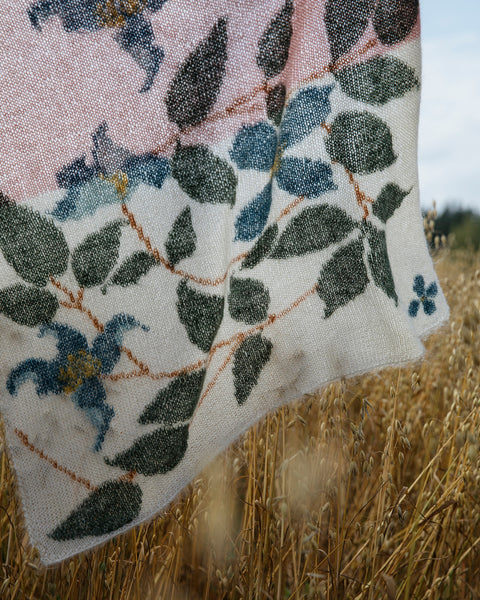
Duplicate stitch follows the shape of the knitting underneath. Depending on the yarn and coverage, some of the background colour may remain visible, giving a motif a softer, layered appearance.
Intarsia creates areas of colour while you knit. Swiss darning adds colour after the base fabric has been knitted. Follow the instructions for your chosen design rather than assuming that the two methods will always produce the same fabric.
What You Need for Swiss Darning
- A knitted piece or practice swatch: begin with stockinette fabric where the V-shaped stitches are easy to identify.
- A tapestry needle: choose one with an eye large enough for your yarn.
- Embroidery yarn: yarn of a similar thickness to the base yarn is a useful starting point. Test its coverage before beginning the motif.
- Scissors and a chart: keep your chosen design nearby so you can track the stitches you have covered.
An embroidery hoop is generally unnecessary for this technique. Hold the knitting comfortably without stretching it, and practise a few stitches on a swatch first.
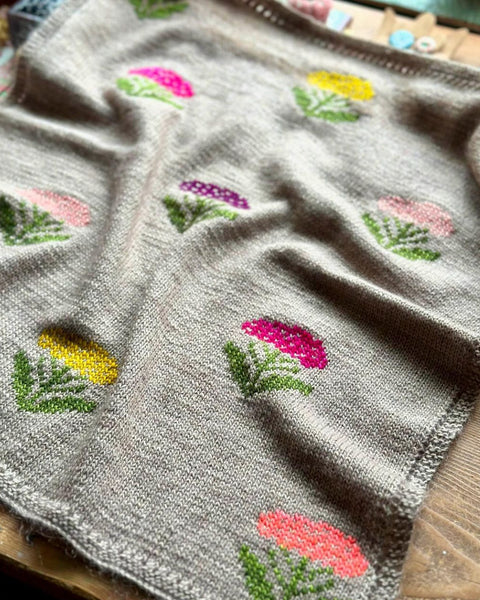
The Embroidered Achillea scarf is highlighted in Laine's original guide as a starting point for this technique. For the complete scarf pattern and its chart, refer to the published design.
Step-by-Step Instructions for Swiss Darning
The eight images below demonstrate the technique on V-shaped knit stitches. They were featured in Laine Publishing's Swiss darning guide, with the demonstration provided by Dee Hardwicke.
1. Bring the Needle Up at the Base of the V
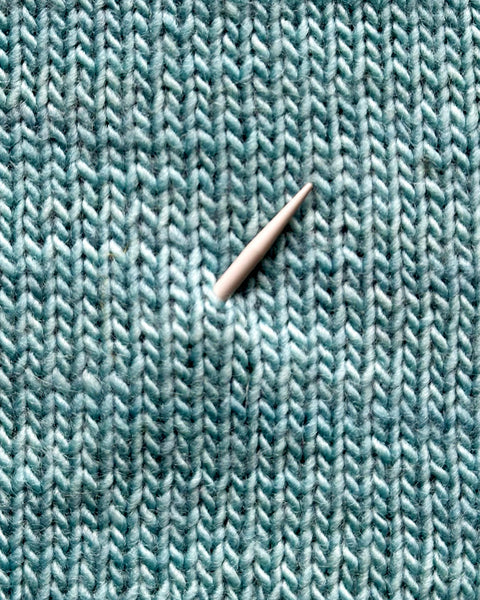
Identify the stitch you want to cover. Bring the threaded needle from the back to the front at the bottom point of that stitch's V. Leave a yarn tail at the back to weave in later.
2. Pass Under the Stitch Immediately Above
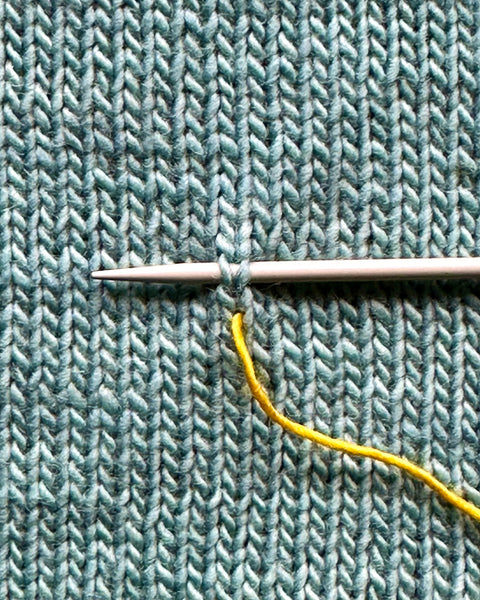
Slide the needle under both legs of the knit stitch directly above the one you are covering. Pass beneath the yarn strands rather than splitting them. This takes the embroidery yarn around the top of your target stitch.
3. Return Through the Starting Point
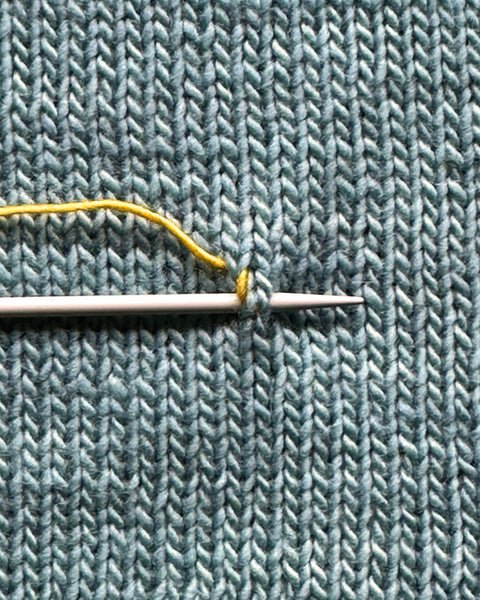
Insert the needle back through the same point where you began, taking it from front to back. The embroidery yarn now traces the V of the original knit stitch.
4. Adjust the Tension Gently
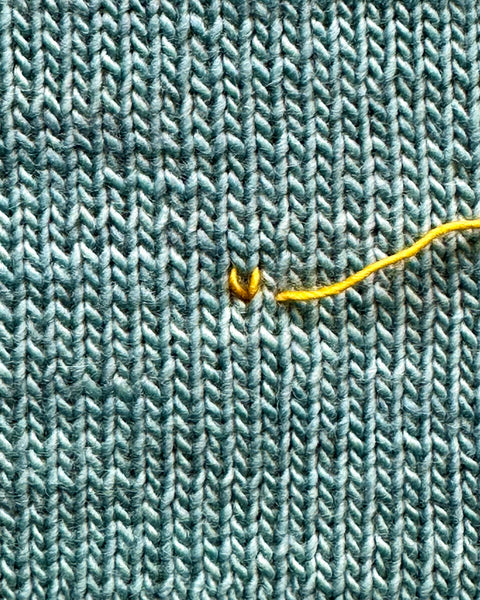
Let the new stitch rest over the original one without pulling the knitting out of shape. It should follow the existing stitch comfortably, without a loose loop or a tight, puckered area.
5. Move to the Next Stitch
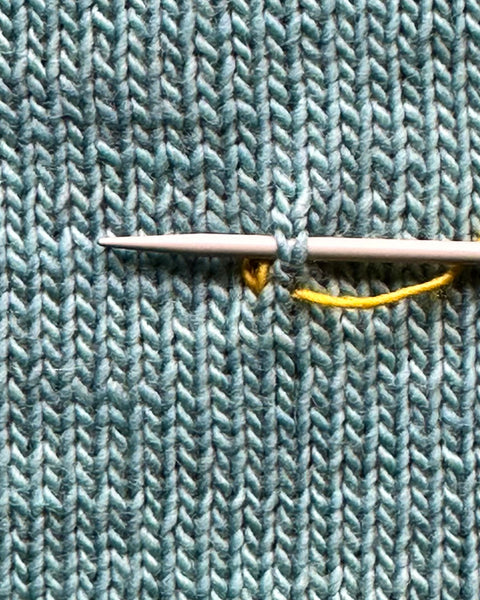
Bring the needle up at the bottom point of the next V in your motif. Repeat the same movement: pass under the stitch above, then return through the starting point.
6. Keep a Consistent Working Direction
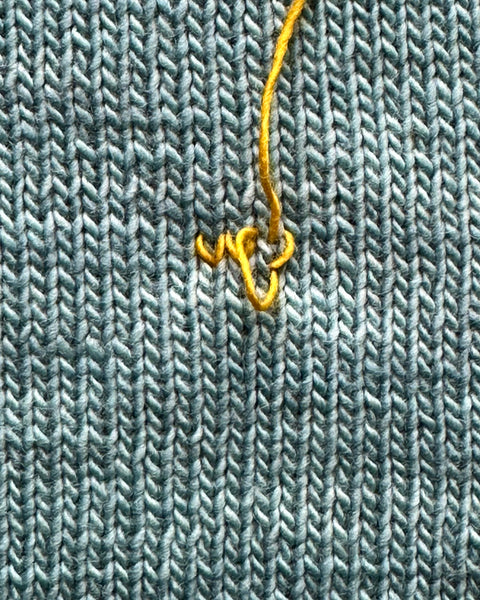
You can work across a row in either direction. Keep tracing the same stitch shape and use a consistent approach as you move along the row. Check your chart regularly so you cover the intended stitches.
7. Avoid Long Strands on the Back
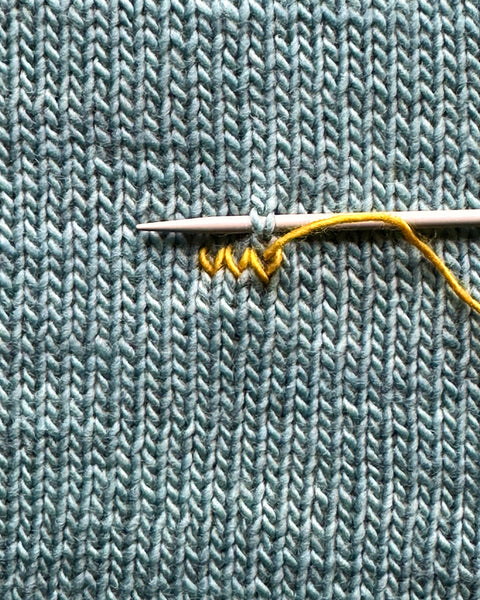
When moving between nearby areas, secure the travelling yarn through the backs of a few stitches without pulling the fabric tight. For widely separated motifs, finish the yarn and start a new length rather than leaving a long strand that could snag.
8. Finish and Check the Motif
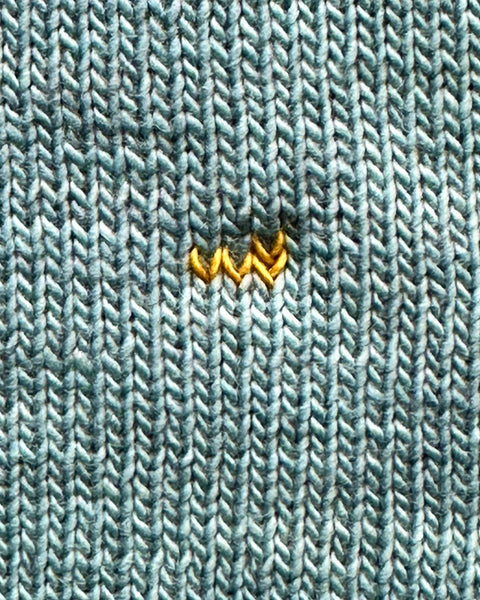
Work in small sections and pause to check the front and back. Weave in the ends securely, then lay the knitting flat to assess the tension. Follow the yarn's care instructions if the finished piece needs washing or blocking.
Common Duplicate Stitch Problems
- The fabric puckers: ease the embroidery tension and check whether a travelling strand on the back is pulling the knitting together.
- The background shows more than you want: test a yarn with better coverage, and make sure the new stitch follows the full V.
- The motif looks uneven: check your stitch placement and compare each duplicate stitch with the knitting underneath.
- The yarn becomes tangled: use a shorter working length and add fresh yarn when needed.
Start with a small practice motif before decorating a finished garment. It is easier to learn the needle path and judge the yarn combination on a swatch.
More Learning and Project Ideas
For further demonstrations, explore Dee Hardwicke's Instagram. Details of Cultivate are available on Laine Publishing's official book page.
Swiss darning is worked over knitting. If you are choosing a crochet project, follow the crochet pattern's own technique and chart instructions.
Explore Kathwool's Modern Botanical crochet PDF collection for floral designs, or browse all downloadable crochet patterns. Each listing explains the project and included resources. Your purchase is a digital pattern for you to make yourself.
You can also visit our free crochet flower patterns and tutorials for smaller projects.
Clothing PDF patterns are coming soon to Kathwool. Keep an eye on our website for the new releases.